
Battery Matching: Voltage, Amps, Fit, Range
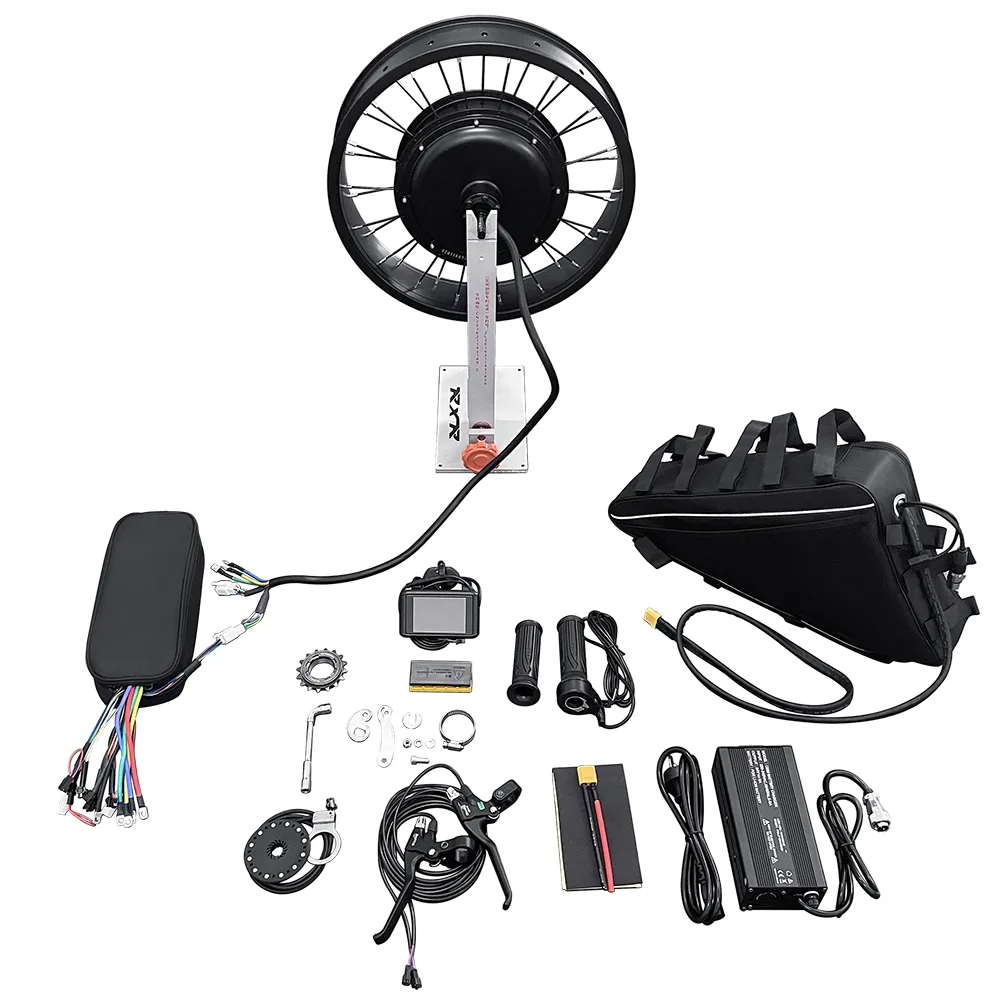
Most riders pick a pack by amp-hours and find out later whether it can survive the controller. This page works the other way round: it starts from the 72V 80A Sabvoton SM7280 controller that ships with the 20×4″ 72V 3000W conversion kit, defines what an electric bike battery has to deliver in continuous current, then sizes capacity for the range you actually ride and checks whether the pack physically fits the frame. If you have been shopping for an ebike battery by amp-hours alone, the four sections below will reorder your checklist.
Start From Your Build, Not the Amp-Hours
Three answers narrow the page to the two rows that matter for your bike. Follow the chip that matches what you already know, and you will land on the voltage tier, the controller pairing or the fit check.
How fast do you need to cruise?
Speed is a current problem before it is a capacity problem: faster cruising asks the pack for more amps per minute.
Which motor is on the bike?
Wattage sets the controller class, and the controller class sets the pack’s continuous discharge requirement.
Where will the pack live?
Fit is the filter that eliminates packs no current rating can save — measure before you compare specs.
Voltage Tiers and the Amp Ceiling for Each Build
Motor wattage is the headline; the controller’s current rating is the real ceiling for the pack. Read the row that matches your build and the “do not exceed” line beside it.
| Build tier | Motor | Controller and current | Minimum pack requirement | Do not exceed |
|---|---|---|---|---|
| 72V 3000W hub | 72V 3000W brushless gearless rear hub, 120 N.m peak torque, 745/825 rpm | Sabvoton SM7280, 72V 80A, 18 tubes, sine wave, self-learning function, supplied with a black bag | 72V nominal pack whose continuous discharge rating covers 80A, then capacity chosen for range | Never connect a 48V or 60V pack — controller, TFT display and charger are all 72V-class |
| 72V 5000W hub | 72V 5000W hub motor kits (20×4″, 26×4″ and 29″ wheel formats) | 72V 100A controller class | A 72V pack rated above 100A continuous discharge before capacity is considered | Do not size this tier by amp-hours: a pack with a low-current BMS will cut out under acceleration |
| 72V 12000W motorcycle | 72V 12000W motorcycle kit, 19″ wheel format | 72V 200A controller class | A high-current 72V pack built and rated for 200A-class draw | Never parallel mismatched packs to reach the rating |
Controller and motor figures are taken from the current kit listings and their published configuration options. Confirm the exact rating on the product page before placing an order.
Continuous vs. Peak Discharge: Why Amp-Hours Come Last
Amp-hours tell you how long a pack lasts. Amps tell you whether it can feed the controller at all. Every pack carries a BMS that watches current continuously and disconnects the pack once that current passes its limit — often as a hard cut mid-acceleration rather than a warning. Peak ratings only cover a handful of seconds. A 72V controller rated at 80A asks for roughly 80A sustained and considerably more in short bursts, so a 30Ah pack with a 40A BMS is a worse partner than a 20Ah pack with a 100A BMS. Amp-hours decide range; the BMS current rating decides whether the bike moves.
Case A — 30Ah pack, low-current BMS
More stored energy, but the pack’s current ceiling sits below the controller’s draw. Expect voltage sag, early cut-outs and a pack that never empties because it keeps tripping.
Case B — 20Ah pack, high-current BMS
Less stored energy, but the pack can feed the controller at full demand. Range is shorter and the throttle keeps working from the first kilometre to the last.
Both cases are illustrative examples for comparison only and are not catalog specifications for any pack. Always check the BMS rating printed on the pack you intend to use.
Working Out Range With Numbers You Can Re-Check
Three steps, one pack: 72V 30Ah. Recompute it with your own riding speed and you will know what to expect before the first charge.
- Convert capacity to watt-hours. Wh = voltage × amp-hours. For the optional 72V 30Ah pack that is 72 × 30 = 2,160 Wh — the total energy available before efficiency losses.
- Estimate consumption at your cruise speed. A loaded fat bike uses roughly 15 Wh/km at 25 km/h, about 28 Wh/km at 45 km/h, and 45 Wh/km or more at 75–85 km/h, because air drag and rolling resistance climb sharply with speed.
- Divide one by the other. 2,160 ÷ 15 ≈ 144 km; 2,160 ÷ 28 ≈ 77 km; 2,160 ÷ 45 ≈ 48 km. The same battery, three very different days.
| Cruise speed | Rough consumption | Realistic range (2,160 Wh) |
|---|---|---|
| 25 km/h, light assist | ~15 Wh/km | ~140 km |
| 45 km/h, mixed riding | ~28 Wh/km | ~75 km |
| 75–85 km/h, throttle-heavy | ~45 Wh/km | ~48 km |
Estimates assume flat ground, steady throttle and a mid-weight fat bike with rider. The product page lists a figure of up to 70 miles (112 km) on a single charge with the 72V 30Ah pack; that number sits at the gentle, low-speed end of the table above and is not what a stop-and-go commute at full throttle will deliver.
Does the Pack Fit Before It Performs?
A pack that clears 80A can still fail your bike on centimetres. These are the published numbers to measure against.
| Item | Published value |
|---|---|
| 72V 30Ah triangle lithium pack (with bag) | 49 × 41 × 30 cm |
| Motor installation width | 150 / 170 / 190 mm |
| Dropout options at checkout | 170 mm or 190 mm |
| Spoke build | 36H × 12g |
| Kit shipping carton | 50 × 50 × 30 cm, 22 kg total weight |
Measure in this order
Check the rear dropout spacing against 150 / 170 / 190 mm first, then the inner triangle against 49 × 41 cm, then the 30 cm depth with the bag fitted. A hardtail usually has the cleanest triangle; a full-suspension frame loses space to the shock, and a 20×4″ fat bike has a wider rear end to account for. If the triangle comes up short, plan a different pack format or a rack-mounted solution and confirm the layout with the supplier before ordering — a larger pack will not fit because it performs better.
Check Fit With SupportWhat Ships, What You Choose, What You Add
One order, three layers: the parts that always arrive, the configuration picked at checkout, and the optional items that change how the finished bike rides.
- Lock the voltage and current. Choose the pack (or confirm your own) so the continuous rating clears the 80A controller before anything else is specified.
- Confirm the dropout. Select 170 mm or 190 mm to match the measured rear spacing of the frame.
- Decide the braking layer. Brake levers or the hydraulic brake system option, based on how much of the 75–85 km/h top speed you intend to use.
- Plan the pack location. In-frame triangle or rack mount, with the charger and any spare bag positioned before the first ride.
In every box
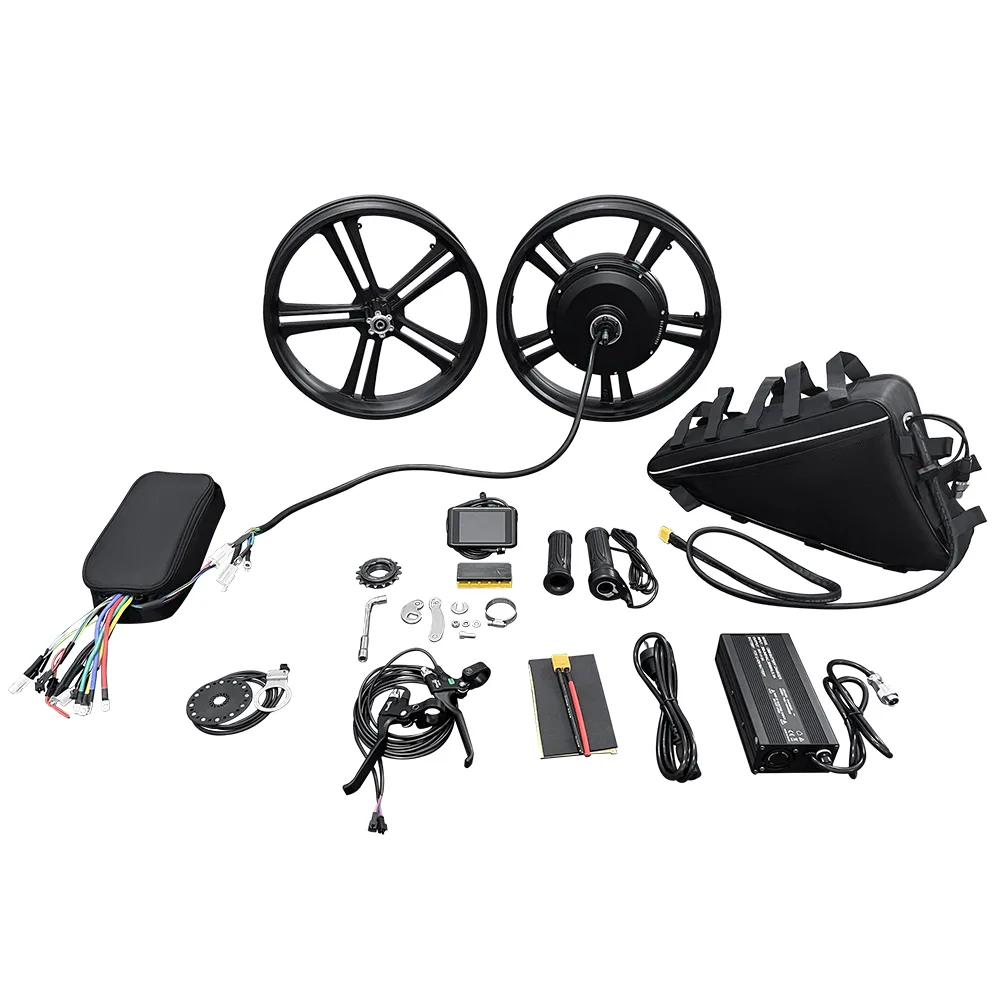
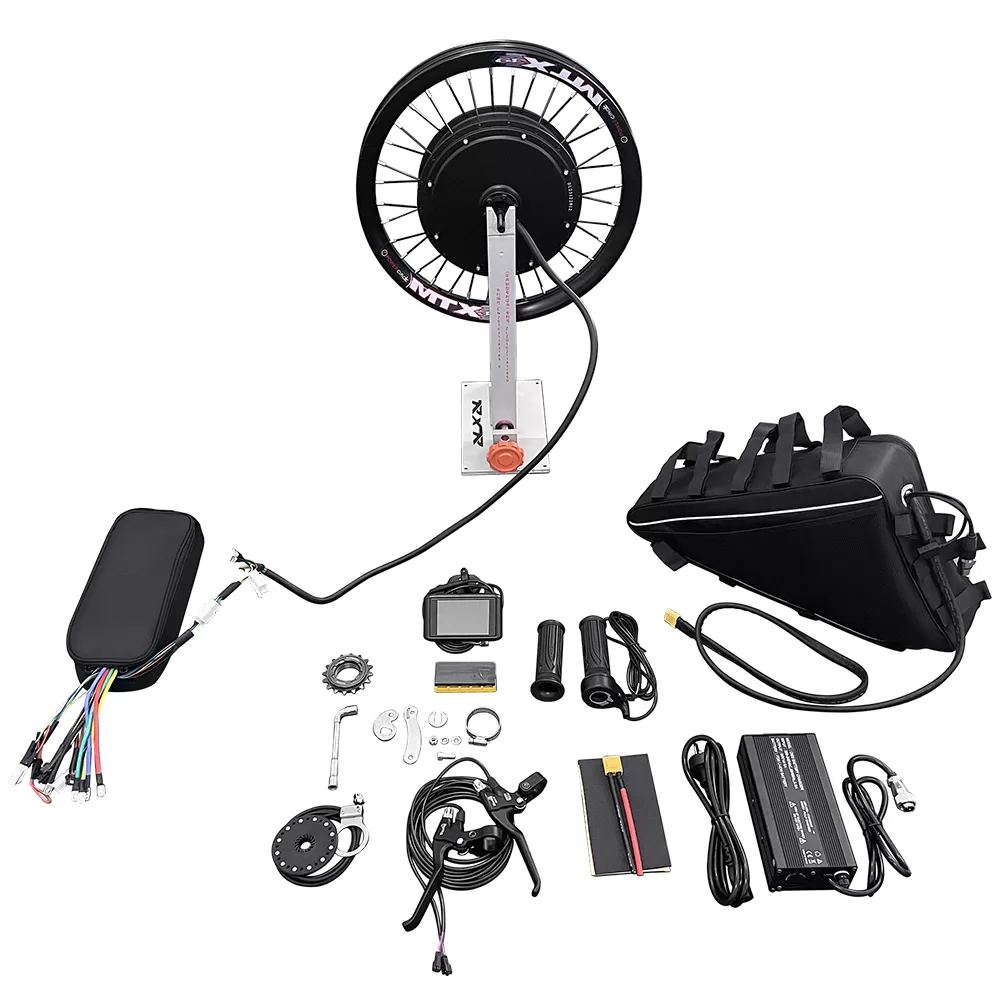
- 72V 3000W rear hub motor on the 20×4″ fat wheel
- Sabvoton SM7280 controller with black bag
- TFT UKC1 colour display with USB port
- Twist throttle and 12-magnet pedal assist
- E-brake sensor levers with power cut-off
- 7-speed freewheel and coupler connector box
- Wrenches, two torque-arm sets, key ignition
Chosen at checkout
- Dropout: 170 mm or 190 mm
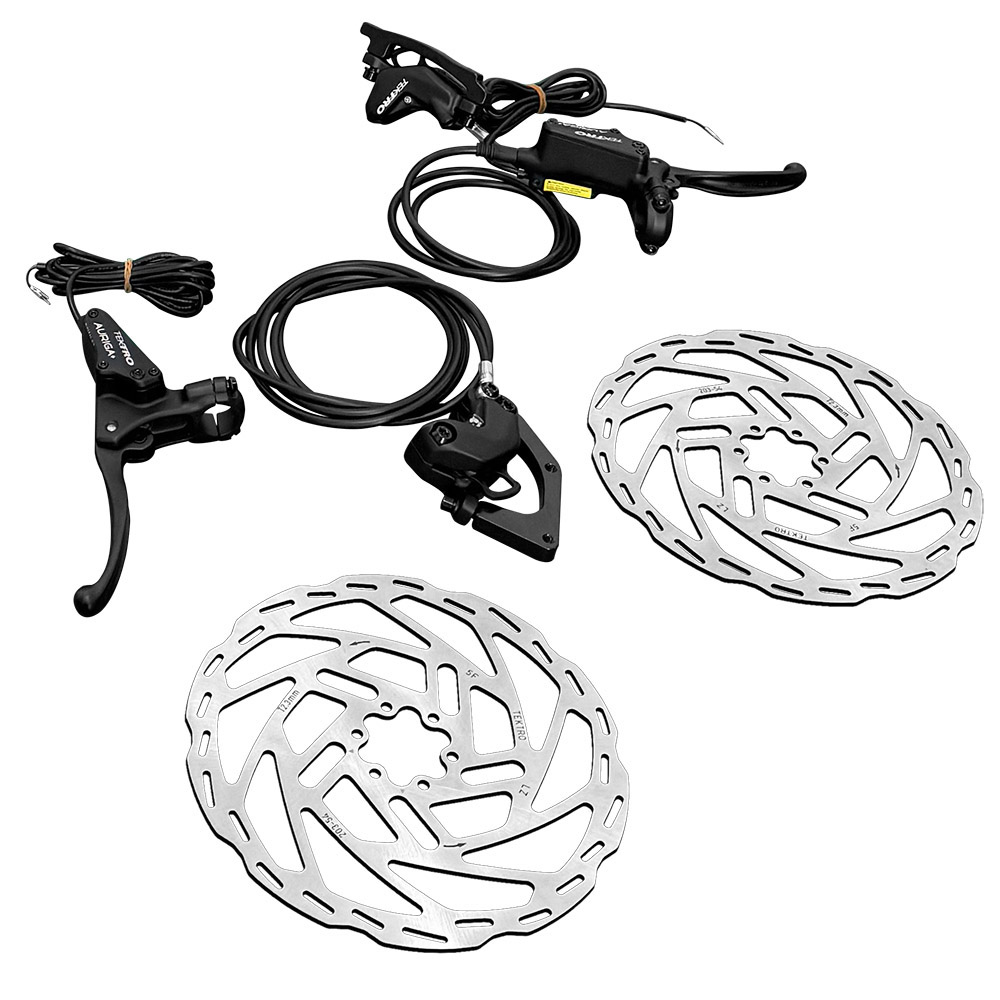
- Brakes: brake levers or hydraulic brake system
- Battery: no battery, or 72V 30Ah triangle pack
Optional upgrades
- Tektro 4-piston hydraulic system with front and rear 203 mm rotors
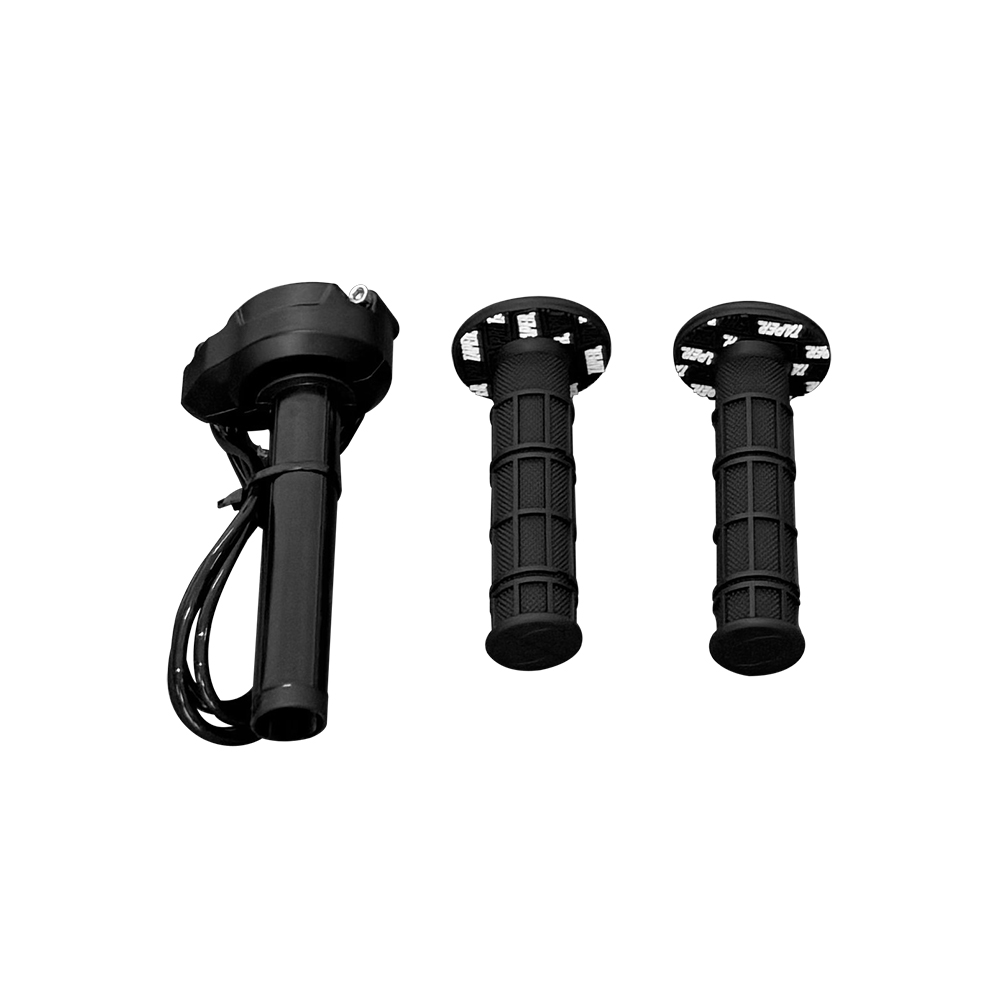
- Surron-type twist throttle with Pro Taper grips
- 84V 5A smart charger, 100–240V AC 50/60Hz, plug matched to your region
Configure the Kit, Then Ask for a Quote
Dropout width, brake type and battery are selected before dispatch, so one order can be built for several bikes at once. If you are ordering multiple kits, need a specific charger plug, or want a battery-free configuration to match a pack you already own, send the details and we will price the configuration.
Related Products
Keep adjacent product options together for a faster catalog comparison.
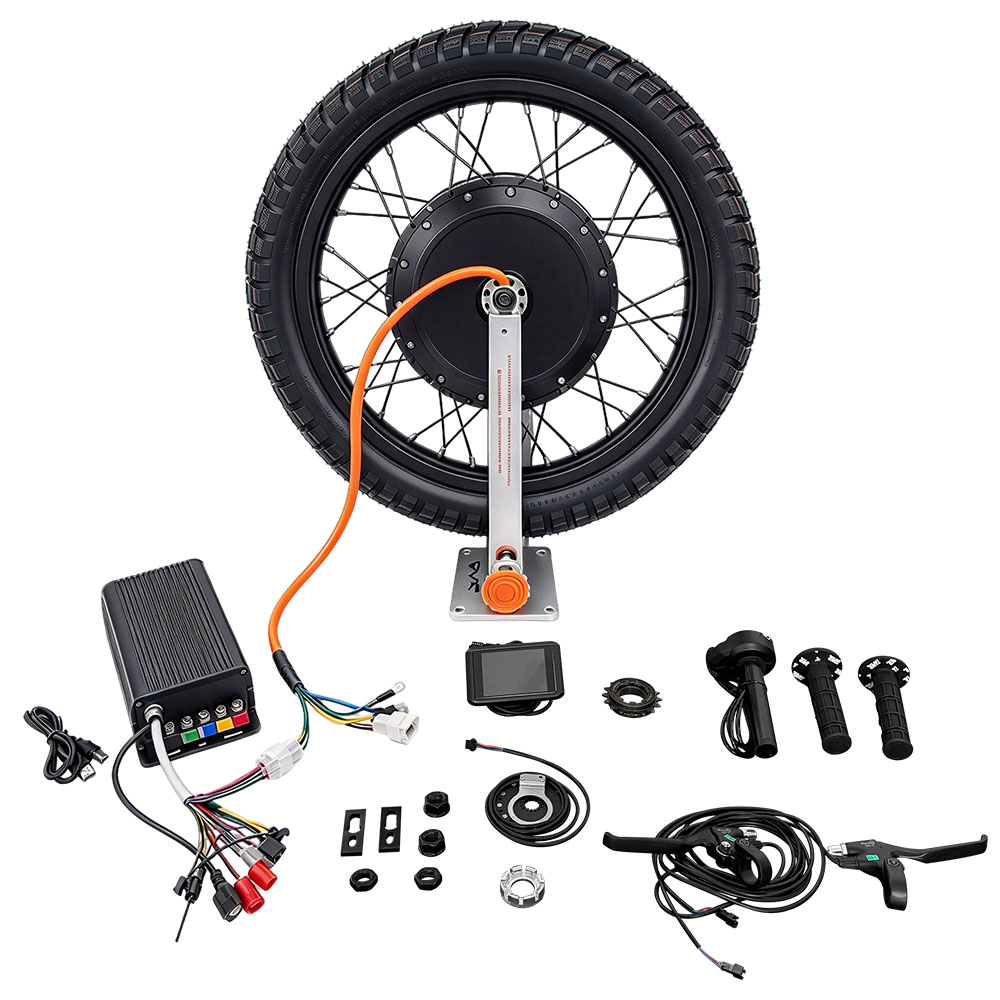
19″ 72V 200A 12000W Motorcycle Kit
19inch 72V 200A Sabvoton SVMC72200 12000W motorcycle bike conversion kit for electric dirt bike, electric enduro bikes and stealth bomber bikes.
View product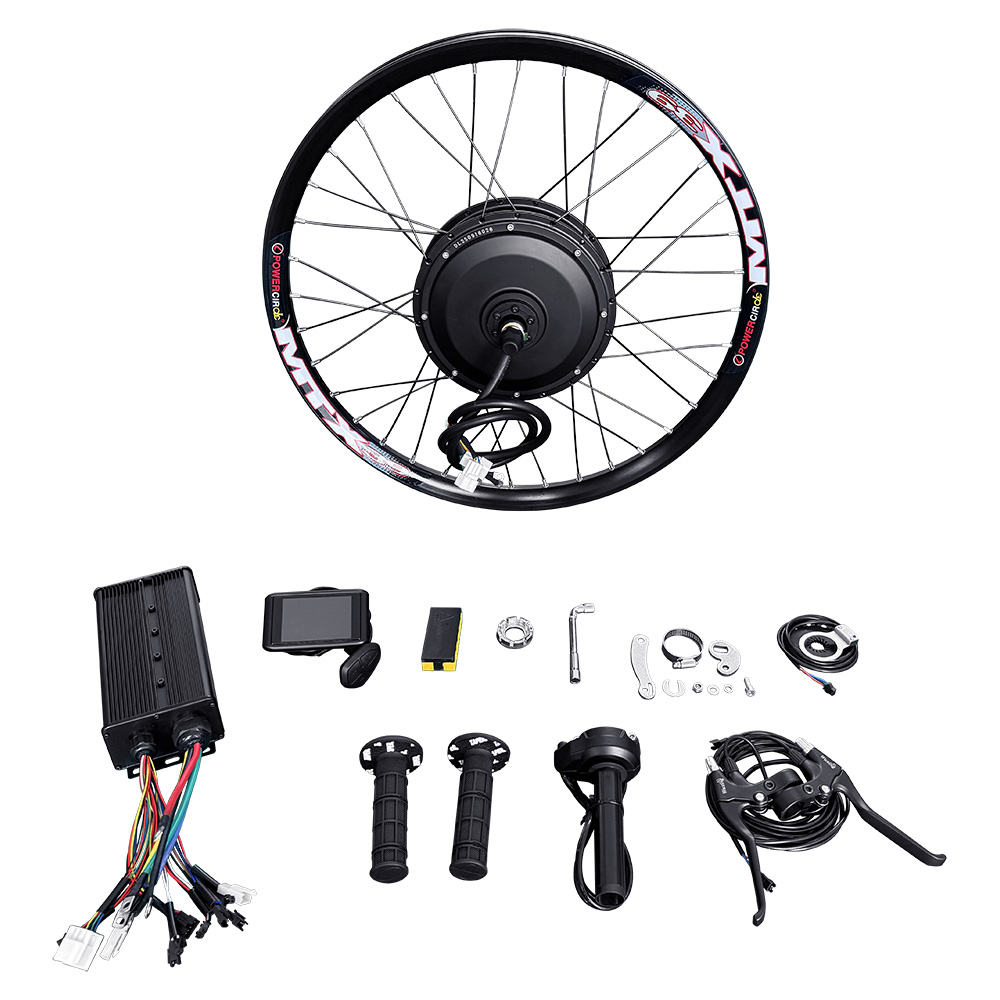
20″/24″/26″/27.5″/29″ 72V 100A 5000W E-bike Conversion Kit
20″/24″/26″/27.5″/29″ 72v 100a Sabvoton SM72100 sine wave controller UKC1 colorful display 150mm dropout 5000w rear motor electric bike conversion kit.
View product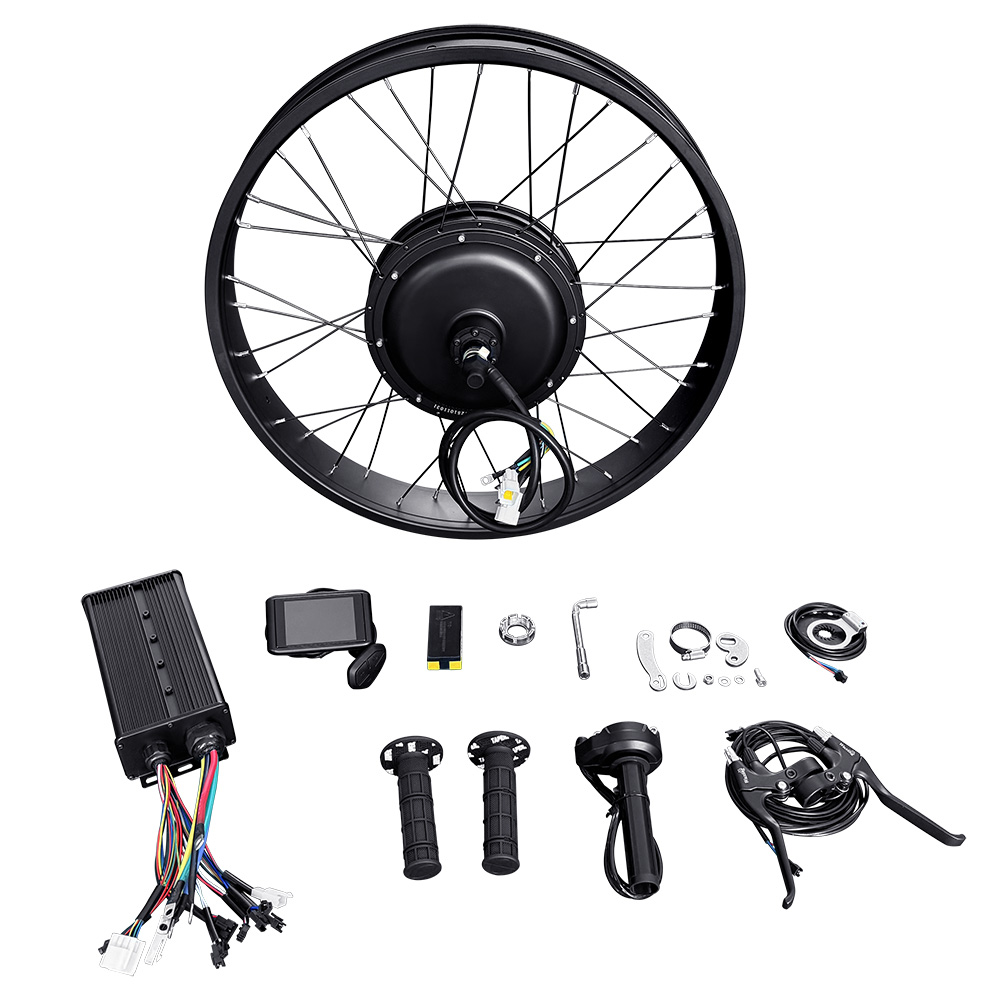
26×4″ 72V 100A 5000W Ebike Conversion Kit
26x4inch 72v 100a Sabvoton sine wave controller UKC1 colorful display screen 150/170/190mm dropout 5000w rear drive motor fat e-bike conversion kit.
View productFrequently Asked Questions
does the 20×4″ 72v 3000w kit include a battery?
the battery is an option, not a default. checkout offers “no battery” or a 72v 30ah triangle lithium pack in a black bag measuring 49 × 41 × 30 cm. choose “no battery” if you already own a 72v pack that meets the controller’s current rating.
how do i match a pack to the 72v 80a sabvoton sm7280 controller?
start with voltage: the controller, the tft ukc1 display and the 84v 5a charger are all built around a 72v system, so the pack must be 72v nominal. then check current: the pack’s bms should be rated for sustained discharge at or above 80a. amp-hours come last and set range, not compatibility.
what range should i expect from the 72v 30ah pack?
the product page lists up to 70 miles (112 km) on a single charge. recomputing from 72v × 30ah = 2,160 wh, that figure fits gentle low-speed riding: at 45 km/h expect roughly 75 km, and at 75–85 km/h roughly 45–50 km, depending on terrain, rider weight and throttle use.
what installation width do i need?
the kit is built with 150 / 170 / 190 mm installation width, and checkout lists 170 mm and 190 mm dropout options. the 36h × 12g spoke build and the 20 × 4″ fat wheel are fixed. measure your frame’s rear dropout spacing before ordering so the wheel and the pack both fit on the first attempt.
which charger does the kit use?
the optional charger is an 84v 5a smart charger rated 100–240v ac at 50/60hz, supplied with a plug suited to the buyer’s country. if you already own a compatible 84v lithium charger with the correct connector, the kit can be configured without one.
can i order the kit configured for a specific bike, or in quantity?
yes — dropout width, brake type and battery are configured before dispatch, so a single order can cover several builds. for multi-kit orders, a specific charger plug, or a battery-free configuration, send the details through the contact page and request a quote.